
The dream of building a home in the countryside often comes with visions of wide-open spaces, quiet nights, and a connection to nature. For many, this also means taking on the responsibility of managing their own domestic wastewater. You become the owner and operator of your own miniature water treatment facility, known as a septic system.
Understanding septic tank installation requirements is a big step toward ensuring your home remains a safe and healthy environment. It is not just a matter of digging a hole and dropping a tank into the ground. There are layers of local regulations, environmental considerations, and technical specifications that dictate how a new system must be built.
If you understand the scope of the project before the heavy equipment arrives, you can save yourself a lot of headache, and potentially, a lot of money.
Securing Permits From Local Authorities

The very first thing any homeowner should do is reach out to their local health department. Every county or local municipality has its own set of rules regarding how sewage is handled.
These local authorities are responsible for protecting the local groundwater and ensuring that human waste does not contaminate the environment. They are usually the ones who will issue your building permit and provide the necessary permits to move forward with the construction.
You might find that your local health officials require a detailed site survey before anything else happens. This survey helps determine where your property lines are, which is important because most systems have strict setback requirements.
For example, you cannot usually have a septic tank installed too close to your house, your neighbor’s property, or neighboring wells. Keeping a safe distance from bodies of water or environmentally sensitive areas is also a major priority for the environmental department in your area.
The Importance of Soil and Site Evaluation
Soil is the most important part of any septic system. It acts as a natural filter, cleaning the wastewater before it returns to the water table. Because of this, the soil type on your property will dictate what kind of system you can actually have.
A health inspector or a professional engineer will often perform a perc test, which measures how quickly water drains through your ground.
If you have thick clay, the water might not drain at all. If you have very coarse sand, it might drain too fast to be properly filtered.
Consider the following:
- Soil conditions determine the size of your drain field.
- The presence of a high water table might require a mound system instead of a conventional system.
- In areas with poor soil, you might be forced to look into alternative septic systems.
It is a bit of a waiting game during this phase. You are essentially at the mercy of the earth beneath your feet. If the soil is not ideal, the permitting authority might require more complex engineering, which can change the entire plan for your property.
Choosing the Right Septic Tank
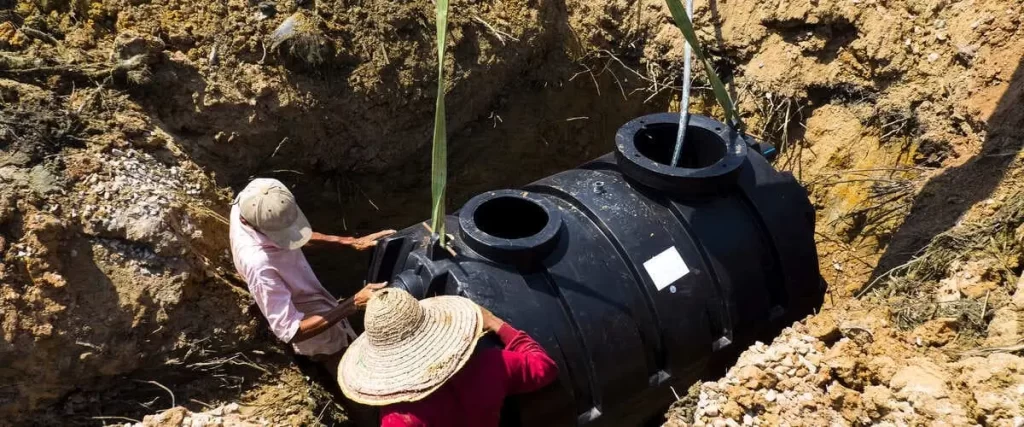
Once the soil is tested and the permits are in hand, you have to decide on the hardware. The septic tank itself is a large, watertight container usually made of concrete, plastic, or fiberglass.
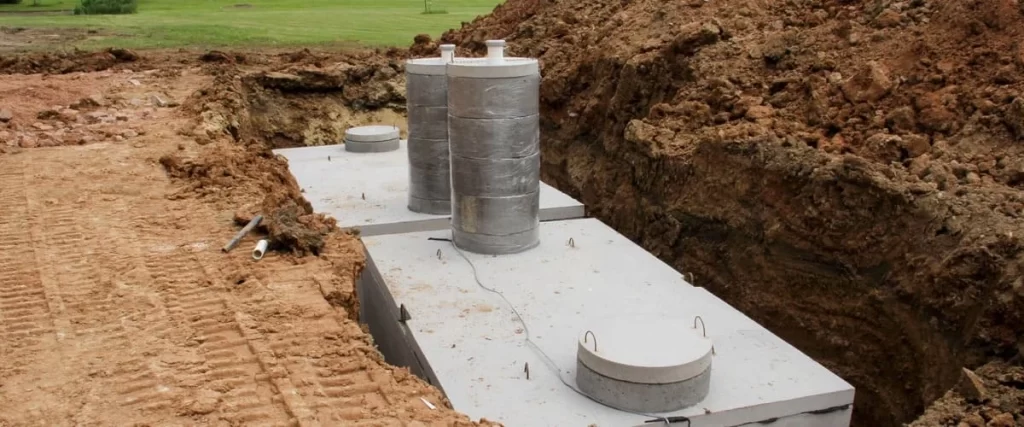
Concrete is very traditional and heavy, often requiring a large crane for installation. Plastic tanks, on the other hand, are lighter and easier to move into tight spots, though they need to be handled carefully so they don’t get crushed during the backfilling process.
Septic tank size is another major factor. This is usually determined by the number of bedrooms in your home rather than the number of people currently living there. The idea is that a house with four bedrooms has the potential to produce more domestic wastewater than a two-bedroom cottage.
Local regulations will specify the minimum gallon capacity you need. A septic tank that is too small will fill up too quickly, leading to clogs or even a total system failure.
Inside the septic tank, things are quite busy. The inlet allows waste to enter, where it then separates into three layers. The heavy solids sink to the bottom, forming a layer of sludge. The lighter greases and oils float to the top, creating a scum layer. In the middle is the liquid wastewater, or effluent.
Most modern designs include a septic filter at the outlet to catch any stray solids before they head out to the drain field.
Understanding How Your Drain Field Actually Works
After the effluent leaves the septic tank, it usually moves toward a distribution box.
This is a small component that makes sure the liquid is spread evenly across the various pipes in your drain field. If one part of the field gets too much water, the soil can become saturated and stop working.
The drain field consists of a series of trenches filled with gravel or a specialized plastic chamber. A perforated pipe runs through these trenches, allowing the liquid to slowly seep into the ground.
If you are dealing with a replacement system for an old septic system, you might find that the old drain field is completely clogged. In those cases, you often have to find a brand-new spot on the property for the new pipes, as the old soil needs years to recover.
It is vital to remember what goes on top of this area. You should never park cars or drive heavy equipment over your drain field.
You also want to keep vegetable gardens away from this spot. While it might seem like a good place for fertilizer, the risk of pathogens from human waste makes it unsafe for growing food.
Alternative Septic Systems

Not every property is suited for a standard setup. If you live in a particularly rocky area or a spot with a very high water table, you might need alternative systems. These are often more complex and involve more moving parts.
One common choice is an aerobic system. These function a bit like a city’s sewage plant, using a pump to inject oxygen into the tank. This speeds up the breakdown of waste by encouraging aerobic bacteria. Because these systems are more technical, they often require a licensed electrician to wire up the alarms and pumps.
Another option is the mound system, where the drain field is built up above the natural ground level using specific types of sand and soil. While these can be more expensive, they allow people to build homes in areas where a conventional system would never be allowed.
The Septic Tank Construction Process
When it comes time for the actual installation, your property will likely look like a bit of a war zone for a few days.
Local contractors will use excavators to dig the pits for the septic tank and the trenches for the pipes. They have to be very precise with the depth and the slope. Most systems rely on gravity, so the pipes need to drop about one inch for every four feet of length, or roughly a two percent grade.
If the slope is too steep, the liquid will run too fast and leave the solids behind. If it is too flat, nothing moves at all.
Throughout the process, there will be inspections. A health inspector will usually need to see the septic tank and the pipes before they are covered up with dirt. They are looking to make sure everything matches the approved plan.
Once they give the green light, the holes are filled, and the ground is leveled.
Maintaining Your Septic Tank
After the system is in the ground and the grass starts to grow back, your job as a homeowner changes to one of maintenance.
You need to be mindful of how much water you use. If you do five loads of laundry in one morning, you might overwhelm the tank and push solids into the drain field.
Keep these in mind:
- Use water-efficient fixtures to reduce the load.
- Avoid pouring chemicals or grease down the drain.
- Keep a copy of your “as built” drawing, which is a map showing exactly where everything is buried.
Routine maintenance is the best way to avoid a costly replacement system down the road. Most systems need to be pumped out every three to five years to remove the accumulated sludge. If you ignore this, that sludge will eventually flow out into your perforated pipe and clog up the soil, which is a very expensive mistake to fix.
We Handle Septic Tank Installation from Start to Finish
When you look at the entire list of septic tank installation requirements, it is clear that this is a massive undertaking.
Between coordinating with the local health department, hiring a licensed electrician for the pumps, and managing the logistics of heavy equipment and tons of gravel, it is a lot for any homeowner to juggle. There is a lot of room for error, and an error in sewage management is something no one wants to deal with.
If you are feeling a bit overwhelmed by the thought of permits, soil conditions, and state regulations, you aren’t alone. It is a complex puzzle that requires a lot of specialized knowledge. Instead of trying to navigate the maze of local authorities and construction hurdles on your own, it might be much easier to let professionals handle the heavy lifting.
Here at Crush Excavation, we have the experience to manage the entire septic tank installation process, from the first site survey to the final inspection. To get started on your project without the stress, call us at [cvg tel] or message us here.