
Planning to build your dream home on a piece of land without city sewer? Then you’re probably wondering about the septic system. You might wonder, do you install a septic system before building a house, or can you wait until after?
The short answer is that your septic system needs to be installed before you build your house. But there’s more to it than just following building codes. Let’s talk about why timing matters so much when it comes to your septic installation.
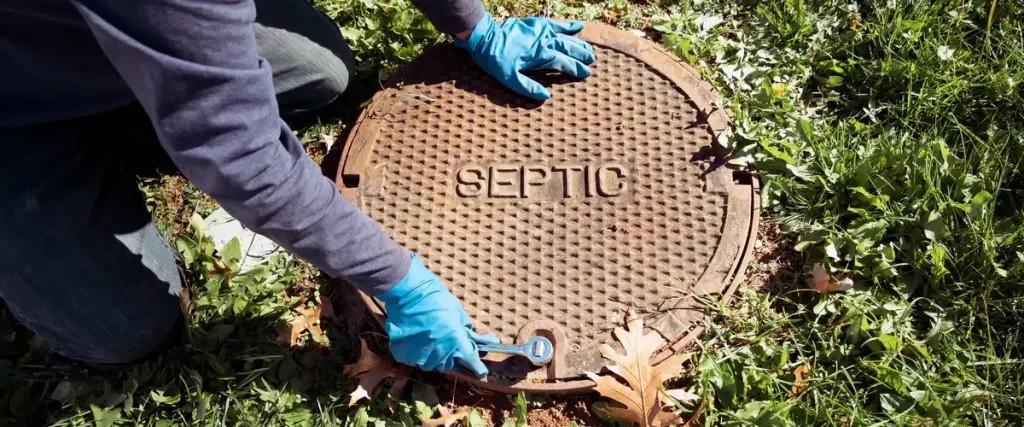
The Answer: Septic System Goes In First
Your septic tank and drain field must be installed before you start building your house. This isn’t just a matter of preference or convenience. Most codes require it, and the practical reasons make perfect sense once you think about it.
The septic field takes up significant space on your property. You can’t just plop it anywhere, either. The location depends on soil conditions, water table depth, and how far it needs to sit from your well, property lines, and the house itself.
Installing the system first tells you exactly where you have adequate space for your actual home.
Why You Can’t Wait Until After Your House Is Built
Imagine you’ve built your beautiful new house, complete with plumbing that drains to… nowhere.
Now, you need to bring in heavy equipment to dig holes and trenches for your septic system. That drilling rig or excavator has to get around your finished structure, driveway, and maybe landscaping you’ve already put in.
The equipment needed for septic installation is massive. We’re talking about machines that create deep holes, move tons of soil, and need room to maneuver. Professional septic tank installation requires clear site access that won’t be available once your house is built.
Plus, there’s the coordination problem. Your septic system’s outflow pipe needs to connect to your house plumbing. If the tank is already in the ground, you know exactly where those connection points are when you’re planning your bathroom and kitchen layouts.
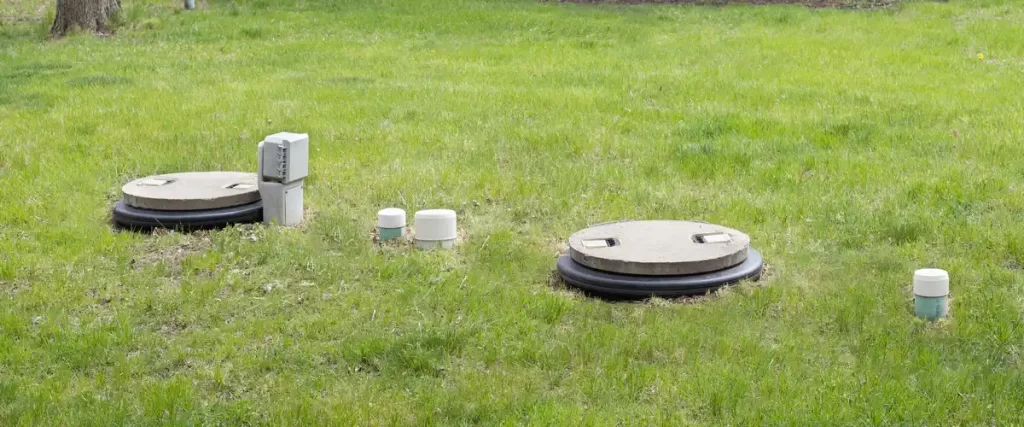
What Happens Before Your Septic System Installation
Before any digging starts, you’ve got some homework to do. This is where buying land with septic in mind gets interesting.
Perc Test and Soil Analysis
The perc test is usually the first thing you’ll tackle. A soil scientist comes out and tests how well water percolates through the ground. Sand drains fast, clay holds water, and rock creates its own set of problems. The test results tell you if your property can even support a septic system.
Some lots fail the perc test completely. Others pass but require specialized system designs that cost more. The health department uses these results to determine the type of system you need and where it should be located.
According to the EPA’s septic system guidelines, proper soil evaluation is one of the most important steps. Your county or local public health department will require this testing before issuing any permits, as well. They want to make sure wastewater won’t contaminate groundwater.
Getting Your Septic Permit
Once you’ve passed the perc test, the design process begins. An engineer or septic contractor creates a plan showing where the tank will sit, how the drain field will be laid out, and how everything connects.
This plan goes to the health department for approval. They’ll review it against local regulations to make sure it meets all requirements. The waiting period varies by location, but plan for a few weeks at minimum. You can’t install anything until that permit is in hand.
The building permit for your house usually comes after the septic permit. Many counties won’t even process your building permit application until they see proof that septic is handled.
The Septic Installation Process Timeline
Here’s how it typically plays out on a new construction site:
- Complete soil testing and get septic permit approval
- Mark utility locations (you don’t want to drill through a power line)
- Install a septic tank and a leach field
- Inspect and approve the system
- Begin house foundation work
- Rough in plumbing during house construction
- Connect house drains to the septic system
- Final inspection once everything is complete
Well drilling often occurs around the same time as septic installation. If you need a well-drilling rig on site anyway, it makes sense to coordinate both projects. Some contractors handle both, which saves you the hassle of scheduling two separate crews.
Your pressure tank for the well system also goes in early. Like the septic tank, it’s easier to install when heavy equipment can access the site freely.
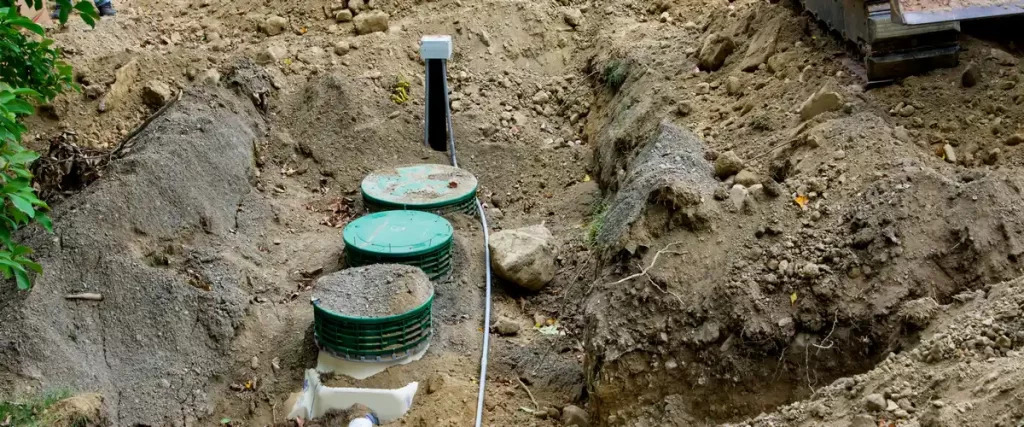
Common Mistakes When Planning New Construction
Even experienced property buyers stumble when it comes to septic planning. These mistakes cost time and money and sometimes force you to rethink your entire building plan.
Common septic planning mistakes include:
- Treating septic as an afterthought – People fall in love with a piece of land, imagine exactly where their house will sit, then find out the only spot that passed the perc test is on the opposite side of the property.
- Underestimating installation costs – Septic installation isn’t cheap, and if your soil conditions aren’t ideal, specialized systems can run into serious money. Budget for the worst-case scenario.
- Installing an undersized system – Some folks try to save a few bucks by going smaller than they need. Bad idea. The health department bases permit requirements on maximum capacity. You can’t install a toilet or bathroom that your system can’t handle.
- Ignoring drain field location when planning your driveway – You can’t drive heavy vehicles over a drain field. That means your driveway route depends partly on where your septic components sit underground.
Frequently Asked Questions
Can you install a septic tank after the house is built?
Technically yes, but it’s a nightmare. You’d need to work within the existing structure, which limits equipment access and likely results in higher labor costs. Any landscaping, driveways, or outbuildings are in the way. It’s possible, but you’ll pay extra for the difficulty.
How long does septic installation take from start to finish?
The actual installation might only take a few days once you have your permit. But the entire process from perc test to final approval can take 2-4 months, depending on your local health department’s workload. Soil testing, design, permit approval, and scheduling all add time.
How close can a septic tank be to a house?
Regulations vary by location, but most areas require at least 5-10 feet between the tank and your foundation. The drain field needs to be even farther (often 20 feet or more from the structure). This protects your foundation from moisture and prevents wastewater from backing up into your home.
Do I need a special contractor for septic installation?
Yes, you need a licensed septic professional in your area. Remember: not every excavation contractor handles septic systems. Look for someone who understands local regulations, has experience with your soil type, and can handle both installation and permitting.
What if my property won’t pass a perc test?
You have options, though they cost more. Engineered systems, such as sand filters, aerobic treatment, or mound systems, can be used on sites with poor drainage. Some properties genuinely can’t support any septic system, which is why you test before you build.
Let the Professionals Handle It
Getting a septic system installed before building your house involves many moving parts. One missed step, and the whole process gets pushed back weeks. Why deal with all that stress when you could hand it off to someone who does this every day?
The team at Crush Excavation knows exactly how to navigate the permitting process, coordinate with health departments, and get your system installed right the first time.
Ready to get started? Call us at (720) 507-4076 or message us here to discuss your project. Let’s get that septic system in the ground so you can start building.